

Clearing The Bases - Issue 059
March 27, 2026

Hello and welcome to Issue 059 of Clearing The Bases, an email newsletter in conjunction with the My Baseball History podcast hosted by Dan Wallach.
The latest episode of the podcast with ADAM DAROWSKI went live on Wednesday, March 11, so if you haven’t had a chance to listen to that yet, make sure you do. Adam is the Executive Director of Design at Sports Reference, and a Negro Leagues and Latin American baseball historian who is focused on the intersection of statistical analysis and historical preservation. We talk about his roles at Sports Reference, including everything he does every day to make sure that Baseball-Reference.com is running smoothly. We also discuss a lot of Adam’s own research, from starting the Hall of Stats, to diving into the story of the 25th Infantry Wreckers, which was a powerhouse baseball team in Hawaii comprised of a number of Negro League legends, and we cover Adam’s work with Scott Simkus and Von Spalding to attempt to compile a list of every baseball player in history to have collected 4,000 total hits as a professional.
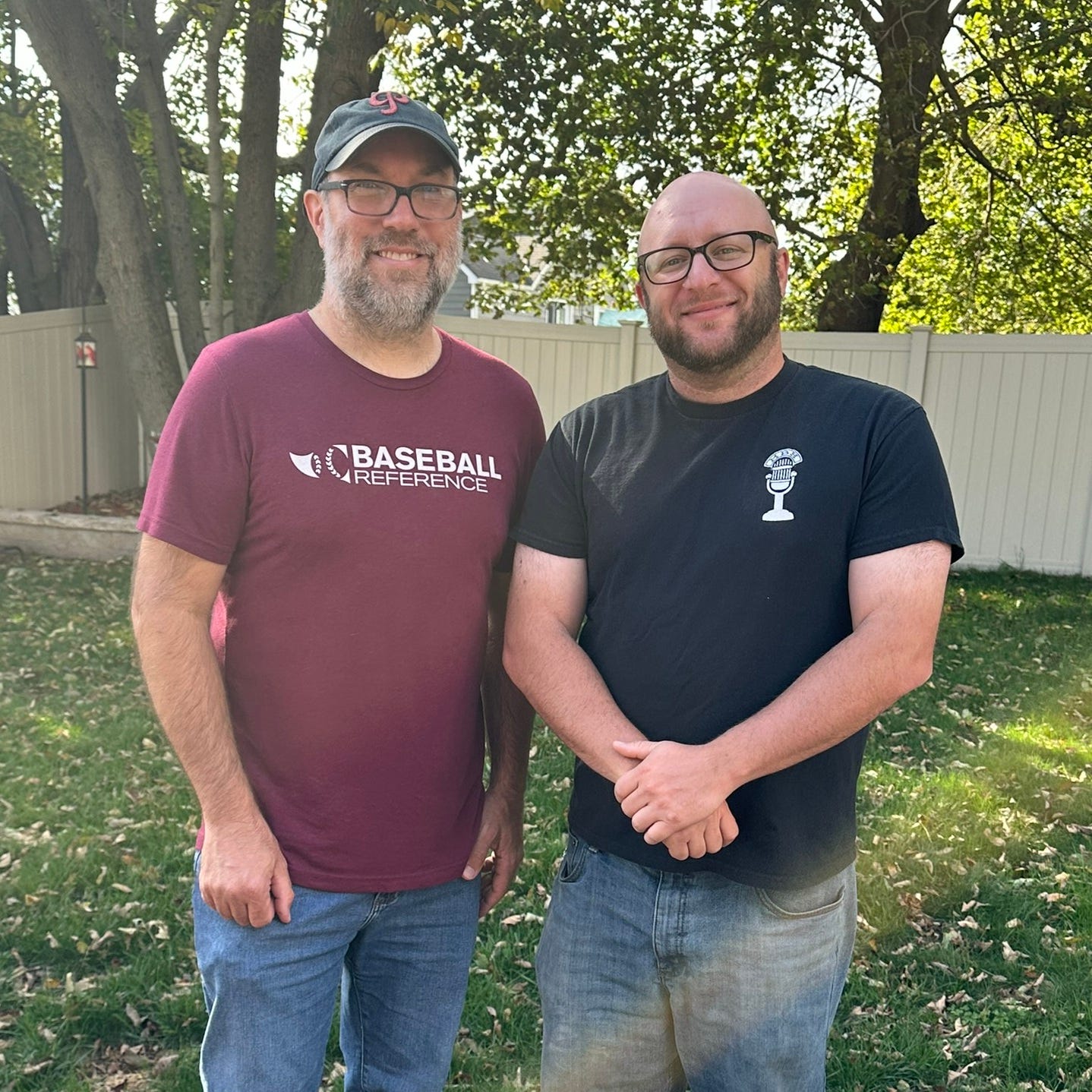
After we discuss all of that, the conversation turns to a different topic: the integration of the Negro League statistics into the official Major League record books. Adam’s own research has helped him understand the real-life and historical implications of that integration, and his personal experience interviewing other researchers, historians, authors, and experts about that very subject makes him uniquely qualified to relay those implications to us. It was a fascinating discussion, and one I was personally very glad to have because there have been questions about that whole process which have been on my mind for more than half a decade at this point. Adam walked us through everything wonderfully, and you’re going to love the episode, if you haven’t listened to it already.
One of Adam’s duties every day is to create the Immaculate Grid at Baseball Reference. Immaculate Grid is a daily trivia game powered by Sports Reference, where the object of the game is to select a player for each cell that matches the criteria for that cell’s row and column. When you play on their WEBSITE, you have nine guesses to fill out the grid. Each guess, whether correct or incorrect, counts as a guess. After nine guesses, the game will end and you will be given a score (number correct out of nine) and a rarity score (based on how obscure your answers were).
Immaculate Grid was originally created and developed by Brian Minter. He posted the first grid on April 4, 2023, and within a few weeks, it was already a sensation sweeping the nation. Adam noticed that certain pages on Baseball-Reference.com were getting large numbers of views, and he realized it was because people were visiting those pages because they were playing Immaculate Grid. Sports Reference acquired the rights during the summer of 2023, and has since expanded the concept to include Immaculate Grids each day for men’s basketball, women’s basketball, football, hockey, and soccer, thanks to the capabilities of their enormous database. The new baseball grid gets posted every single day at 6:00 am ET.
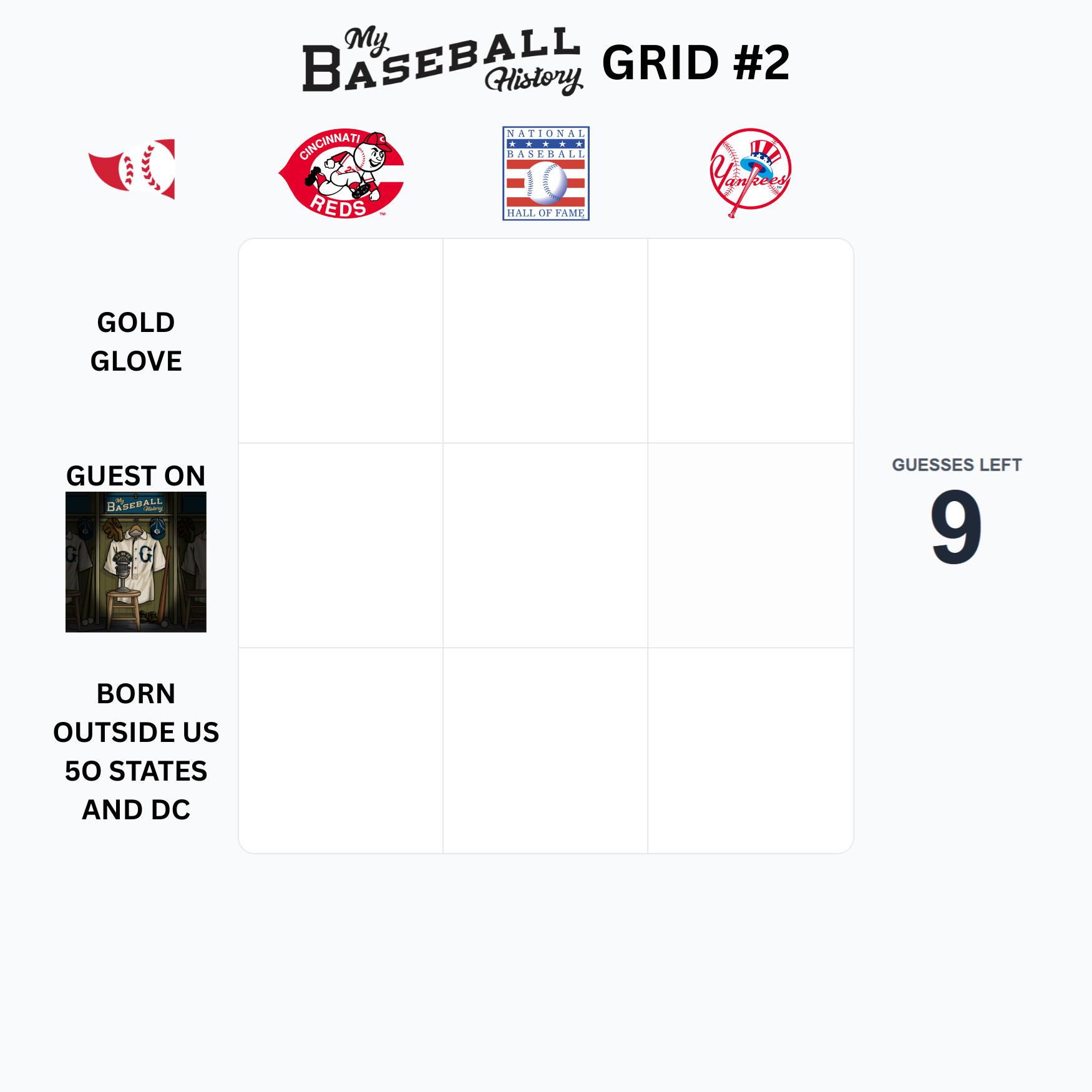
If you’ve never played, I highly recommend it. You can try the official Baseball Reference version by clicking HERE, but in honor of Adam’s appearance on our show, I created a My Baseball History Immaculate Grid, which you can play right here. The columns, from left to right, are people who played for or worked for the Cincinnati Reds, then the middle column is people who are either members or employees of the National Baseball Hall of Fame, and the column on the right is people who played for or worked for the New York Yankees. The rows, from top to bottom, are players who won a Gold Glove, people who have been a guest on My Baseball History, and players who were born somewhere other than the 50 states which make up America, or in Washington, D.C.
The way Immaculate Grid works is, when a category like “Gold Glove” is paired with a team, the player must have won a Gold Glove in a season during which he appeared for that team. When paired with a non-team category, it does not need to have been in the same season. So, to appropriately fill in the top left box, you would think of someone who won a Gold Glove while playing for the Cincinnati Reds. To appropriately fill in the middle box, you would think of someone who has been a guest on My Baseball History and is also either a member or employee of the National Baseball Hall of Fame. And to appropriately fill in the bottom right box, you would think of someone who was born outside the US and has also played for the New York Yankees at any point during their career. All of the other boxes must fulfill the requirements of the row and column they line up with, as well. Hopefully this can serve as a fun little introduction to the game for you, and you can continue playing every day on the official Sports Reference version(s) of your choice.
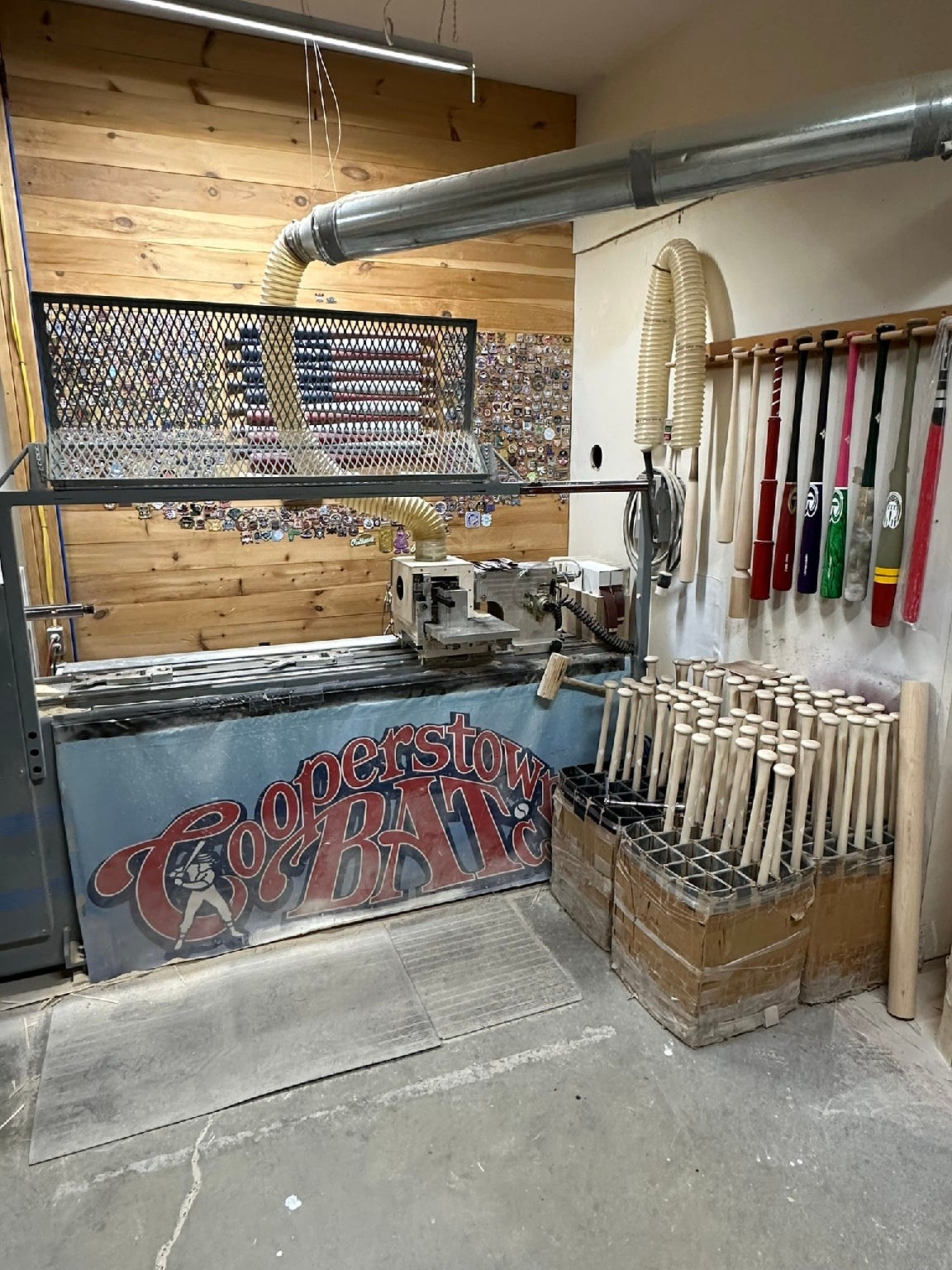
This past weekend in Cooperstown, there was a really fun event hosted by former Cooperstown Mayor Jeff Katz and the Friends of Doubleday organization to raise funds for the historic ballpark. There were multiple presentations, including ones given by friends of the show TODD RADOM and ADAM DAROWSKI. There was an opportunity to play catch on Doubleday Field. There was a card pack night, where a bunch of friends (old and new) got together to rip open packs of baseball cards (old and new) and hang out for a few hours. And there was even a chance to tour the Cooperstown Bat Company factory, which was really interesting.
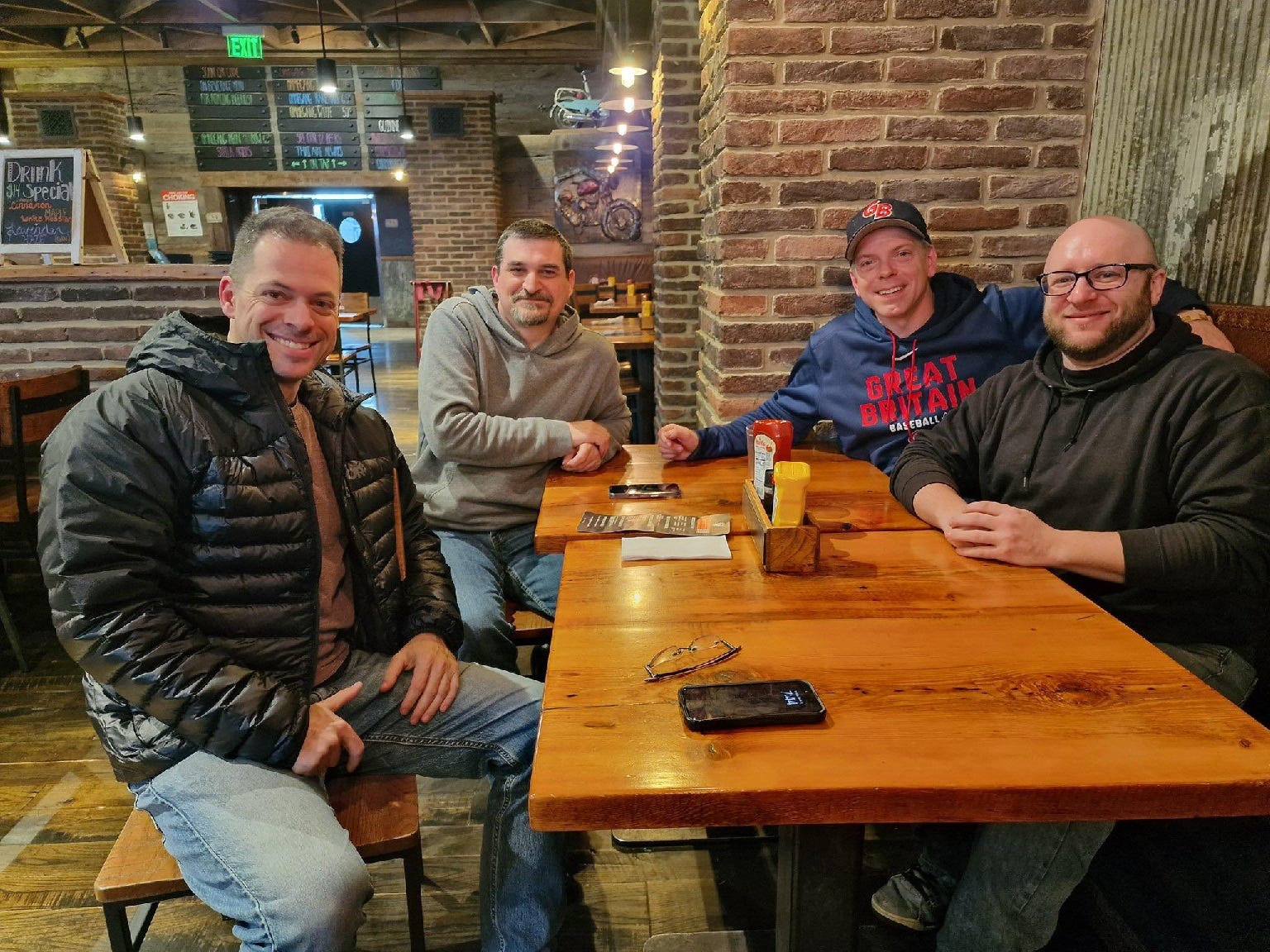
You know I can’t take a trip to Cooperstown without stopping at Willis Monie Books, so I came home with a box full of treasures, and had dinner with Cary Smith, and friends of the show ANDY BROWN and ANDREW ARONSTEIN before heading back to Cleveland. It was a great little trip, and it was so nice to run into so many people who have become such good friends over the years of doing the podcast and being a part of the baseball research community. A late-night conversation with Andy Brown also lit a fire under me to pursue a project I’ve been thinking about for a little over a year now, so stay tuned because I’ll have a pretty big announcement some time in the next couple months.
As I have previously written about, on January 31, I presented a discussion at Progressive Field to the local Jack Graney (Cleveland) Chapter of the Society for American Baseball Research. My topic was Shoeless Joe Jackson’s complicated relationship with the Hall of Fame. One of the attendees was Ed Kasputis, who is one of the hosts of the Baseball PhD podcast. After hearing my presentation, Ed asked if I would be willing to be a guest on their show, and we were able to make that happen earlier in March. It was fun to be able to talk about some of my own research and ideas on another show, and I’m grateful for the opportunity Ed gave me to be able to share those thoughts with his audience. If you would like to listen to that episode, you can do it HERE. My segment starts at 14:40.

Don’t forget, it’s a huge help when you Rate and Review the podcast on whatever platform you choose to listen. 5-Star ratings help our podcast get shown on more people’s suggested podcast pages, which means more people will hear our show. It just takes a couple seconds of your time, but it really helps us a lot. And of course, liking us on social media, interacting with our posts, and sharing things with your friends is great, too. Feel free to forward this email to anyone in your life who loves baseball, and hopefully they’ll enjoy the podcast and learn a thing or two. But no matter how you choose to support us, even if it’s just by listening, we appreciate you being here.
Until next time, I’m Dan Wallach, and this is My Baseball History.
FACEBOOK - BLUESKY - TWITTER - INSTAGRAM - WEBSITE
©2020 - 2026 Dan Wallach. All Rights Reserved.