


Hello and welcome to Issue 072 of Clearing The Bases, an email newsletter in conjunction with the My Baseball History podcast hosted by Dan Wallach, which is part of The Shoeless Podcast Network.
The LATEST EPISODE of the podcast with Mark Armour went live on Wednesday, October 14, so if you haven’t had a chance to listen to that yet, make sure you do. Mark is a baseball historian, researcher, and writer who was the recipient of SABR’s highest honor, the Bob Davids Award, in 2008, and of the Henry Chadwick Award, honoring baseball’s greatest researchers, in 2014. Mark’s latest curiosity has resulted in what he calls his SATCHEL PAIGE PROJECT, whose goal is a complete pitching log for Satchel Paige’s entire life. At the time of this, Mark has documented more than 2,000 games in which Satchel Paige appeared during his pitching career, ranging from 1926 all the way to 1977.
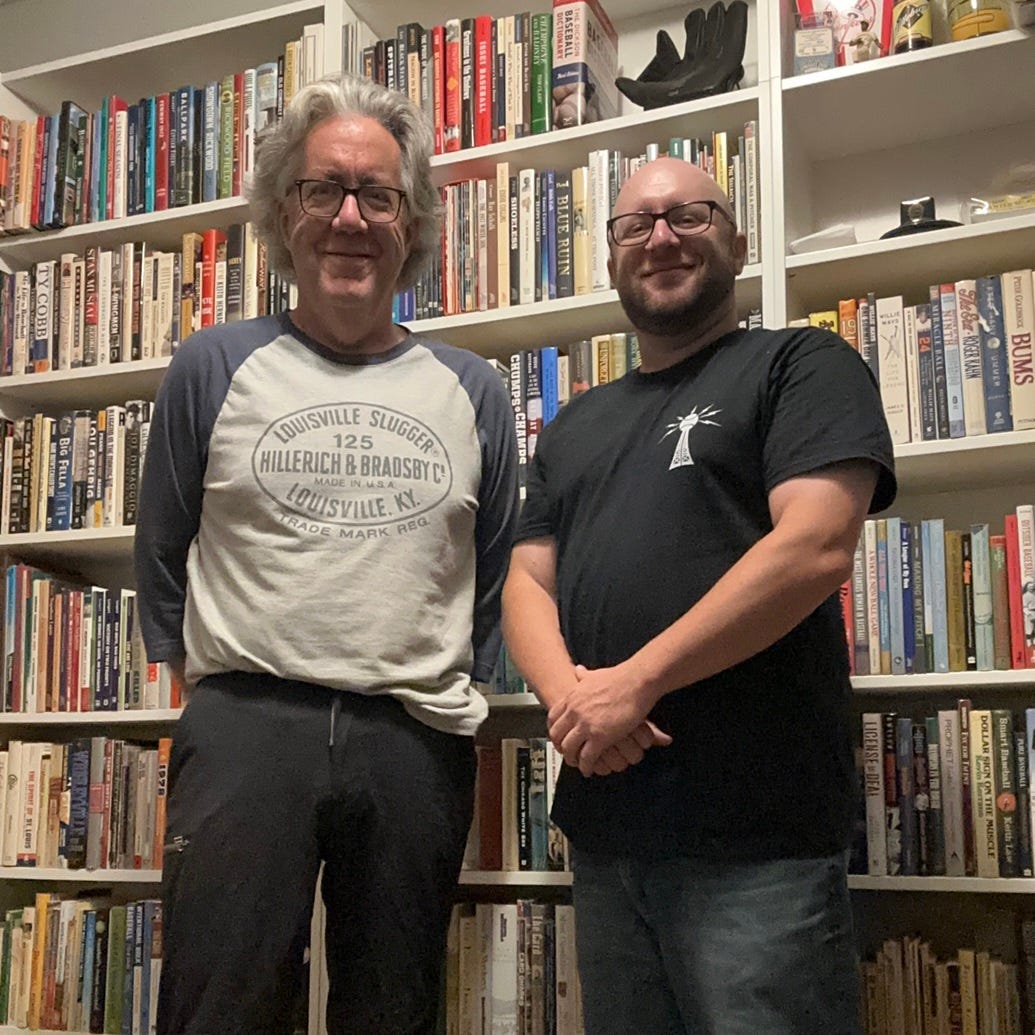
We’re really trying to grow our audience for the show, and for The Shoeless Podcast Network, as a whole, and sharing the episodes, sharing our daily social media posts, or sharing these email newsletters is a super easy way you can help us do that, for free. We’ll even make it worth your time, with one lucky listener winning our giveaway prize for each episode. To that end, we’re changing the way we do our giveaways this season. No more trivia questions you need to answer. No more having to decide between Twitter or Bluesky, and hoping the platform you prefer is the one that gets picked this month.
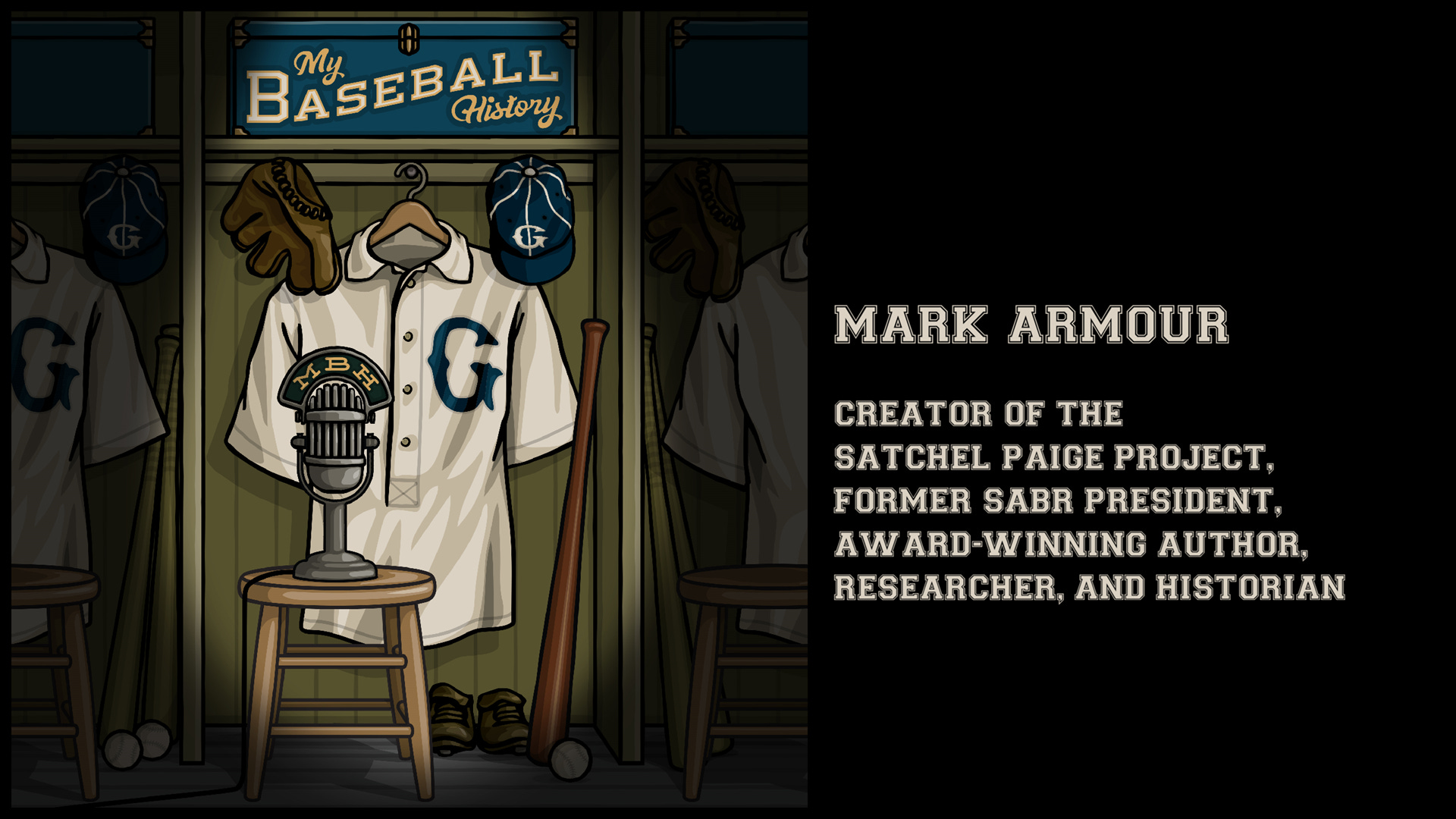
All you have to do to enter our giveaway contest for an episode is to go to OUR FACEBOOK PAGE, and share the post announcing the new episode. That post gets made on the second Wednesday of every month, and will always have the graphic you’re seeing right here posted along with it. Share that post to either your page or to your story so your followers can see it. That’s literally all you need to do. Follow us. Share the post. Done. You are entered into the contest. The winner of this episode’s contest will win a copy of the book Satchel: The Life and Times of an American Legend, by Larry Tye.
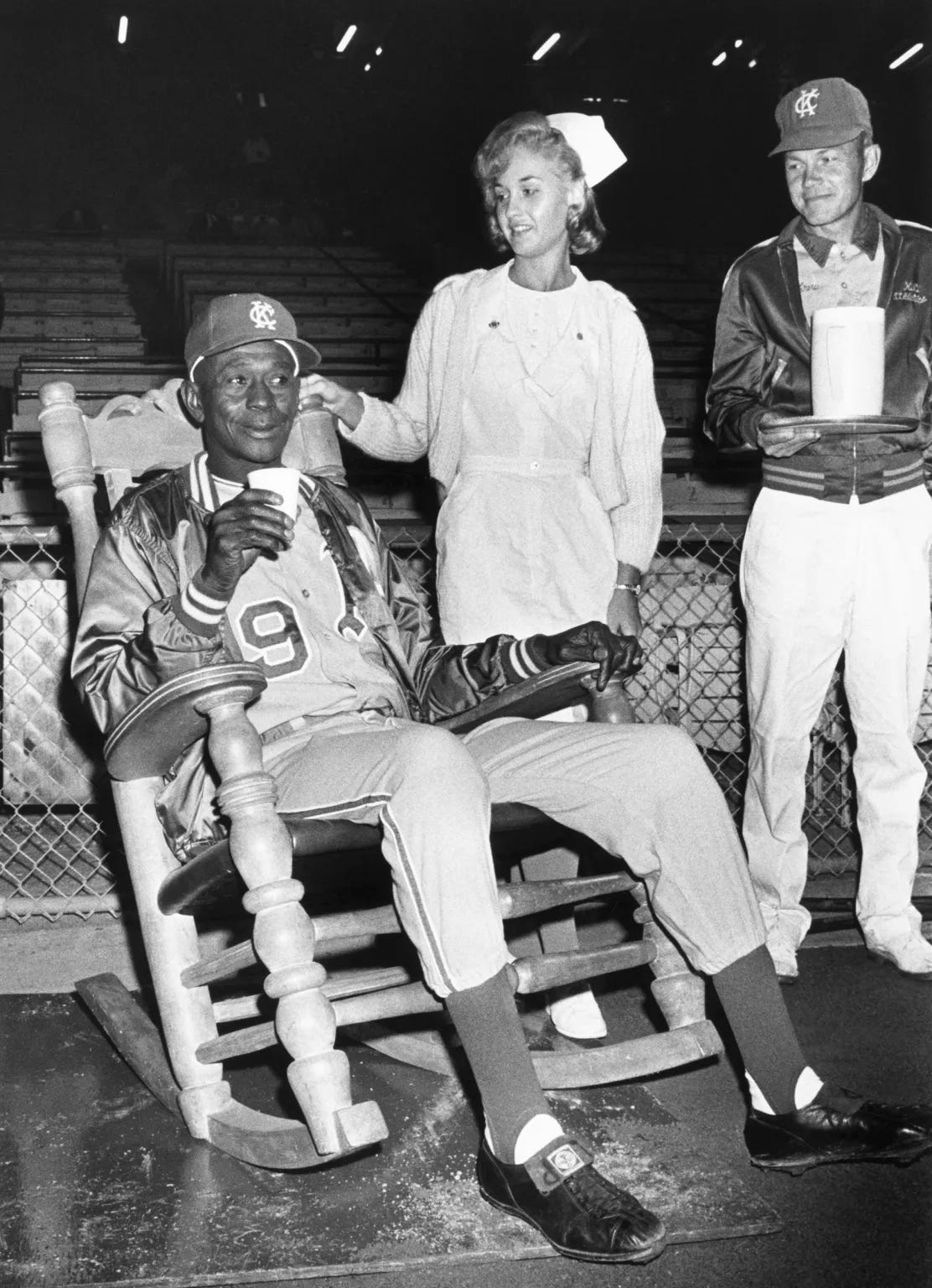
One of the thing that was so impressive about Satchel Paige’s career was his durability, which led to his longevity. As GARY CIERADKOWSKI writes, “in the summer of 1938… Paige’s arm, which had been working non-stop year-round for more than a decade, suddenly went dead.” He lost velocity on his fastball, but he responded by adding a changeup and experimenting with different arm angles, eventually inventing his “hesitation pitch.” But other than that one major flare up, Satchel’s arm stayed relatively healthy for his entire career. Today, it seems as though pitchers are going down with arm injuries every 17 minutes.
With the 2027 MLB season in limbo, possibly being lost altogether because of the potential-but-almost-certain work stoppage, I predict that a large number of pitchers are going to elect to have Tommy John surgery within the next 6 weeks. Recovery from an ulnar collateral ligament (or UCL) reconstruction typically takes 12 to 18 months for a full return to competitive overhead throwing, which means that if a pitcher got one now, they would almost certainly be fully healed by the start of Spring Training in 2028. They would miss all of 2027, but who cares, if 2027 is going to be a lost season anyway?
“But why would a pitcher elect to have Tommy John surgery if they don’t need to have it? If they’re not injured?” Great question, thank you for asking. A SURVEY DONE by the New York Yankees head team physician, Dr. Christopher Ahmad, revealed that more than half of the high school athletes responding – and 37 percent of parents – believe Tommy John surgery should be performed even on non-injured pitchers to enhance their future performance. The reason for the misperception is that analysts tend to measure a pitcher’s post-surgical pitching velocity against the speed at which they threw near to the day when they injured their UCL, orthopedic sports surgeon Dr. J. Martin Leland III, MD says.
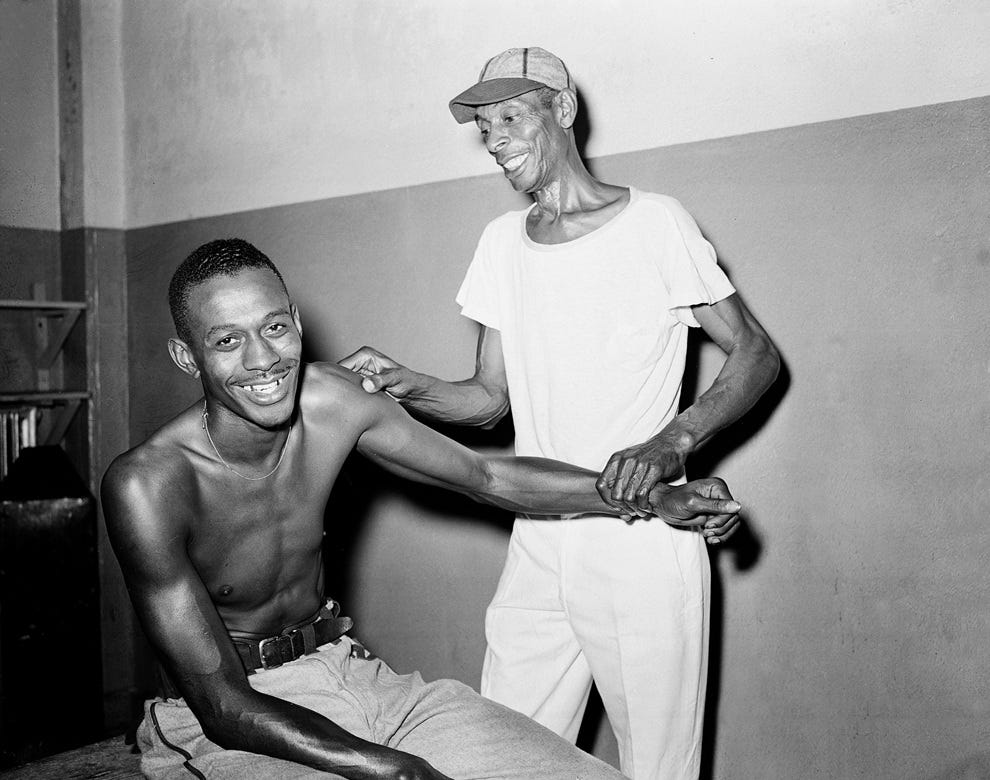
While having Tommy John surgery does not guarantee that you’ll come back better or stronger than you were pre-surgery, MLB pitchers often show some improvement in performance upon return from Tommy John surgery. Those improvements for a professional or amateur pitcher are usually due to the surgeon fixing the problem, followed by the pitcher working intensely with the physical therapist, athletic trainer, strength coach, and pitching coach, but I feel like players are going to look at the results and not necessarily understand or care about the reason.
Of course, the time without pitching after surgery also helps the athlete’s body. In previous generations, Major League pitchers grew up competitively pitching only a few months each year, but nowadays, leagues and teams are available for amateur players to play competitive baseball all year. Research has shown a strong link between too much competitive pitching and arm injuries at any age, so being forced to take some time off may very well be good for a pitcher, in the long run. Performance eventually decreases over time for MLB pitchers after Tommy John surgery, similar to the typical decrease over time for healthy MLB pitchers, but once you have Tommy John surgery, you almost never have that same injury again in your career. So, if preemptively having it will mean that the rest of your career will be UCL injury-free, that may be a decision a number of pitchers make.
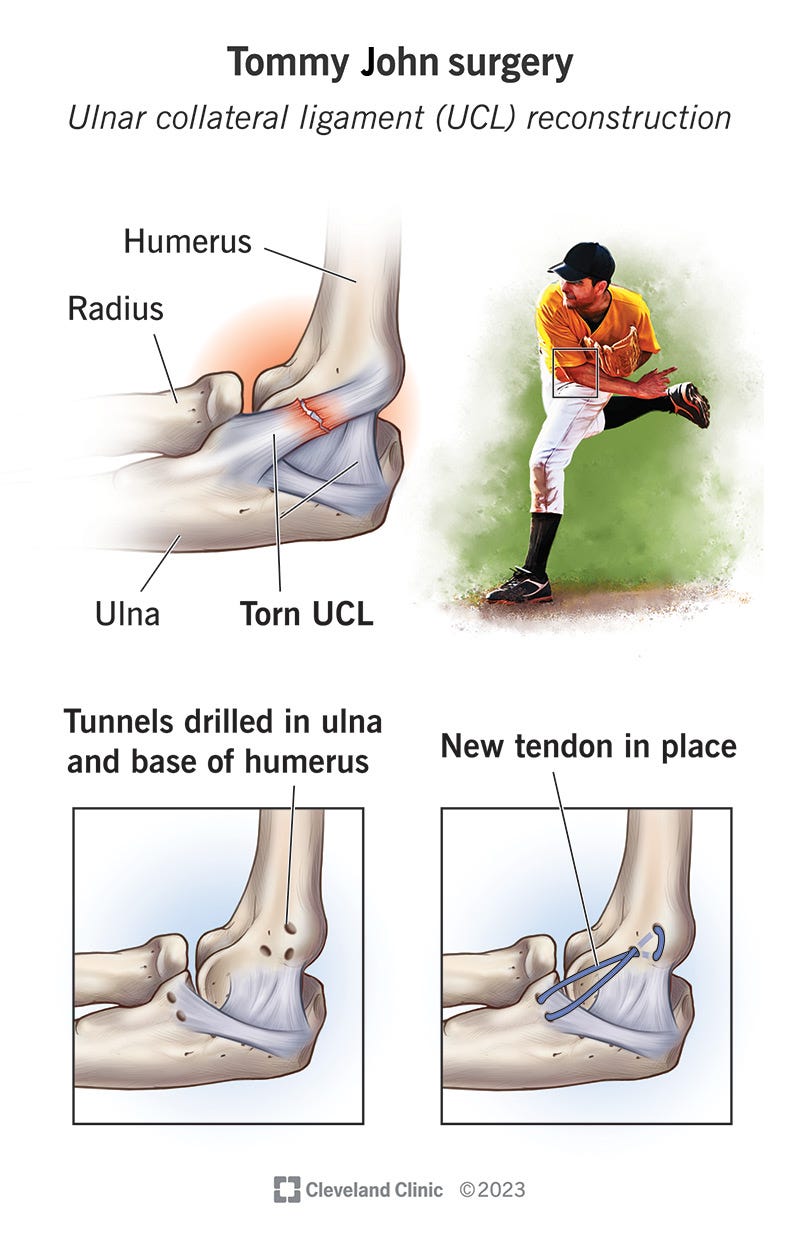
Some pitchers have actually had an increase in velocity post-surgery, compared to before their injury. As DR. AHMAD NOTES, it is important to realize that a number of athletes had played for many years with a slowly deteriorating UCL without knowing it. Their elbow never felt good, but they could still continue to play. They got so used to elbow soreness that they thought the feeling was normal for them. Eliminating the pain that holds them back from full effort throwing is likely how velo increases in some players, post-surgery. While it is important to realize that 10% to 20% of pitchers never make it back to their previous level after Tommy John surgery, I wouldn’t be shocked if players take that gamble, hoping to improve their strength and endurance for the remainder of their career, once MLB is back in full swing in 2028.
Even if the work stoppage in 2027 doesn’t cost MLB the entire season, a pitcher missing a month or two of baseball – likely being scheduled last-minute, with travel schedules and pitching schedules they’re not used to – would be well worth it, as opposed to not getting Tommy John surgery in 2027, and then getting injured in 2028 when baseball is fully back. If the tradeoff is potentially missing a couple months in 2027, or missing all of 2028 and possibly the early part of 2029, I think that’s a risk some pitchers won’t be afraid to take. We’ll see what happens.
My buddy Nick recently started a free daily MLB newsletter called The Daily Playograph, which is written in the style of a 1910s sporting page. If you are looking for even more daily content than the On This Day in Baseball History posts you see from following @ShoelessPodcast on Facebook, Instagram, Twitter, and Bluesky, The Daily Playograph has an “On This Date” history story in every edition, too. Nick’s newsletter is named after the Playograph, which was a machine or electric scoreboard which was used to transmit the details of a baseball game to crowds in the era before televisions or radios were commonplace.
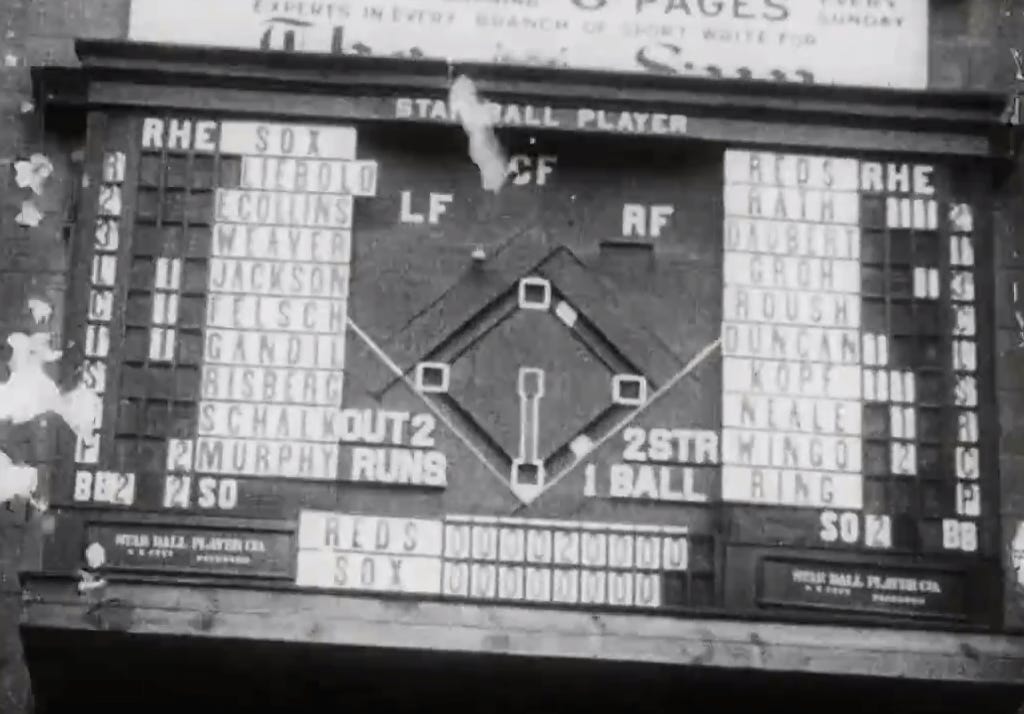
If you have ever followed the “gamecast” feature on an app or a website, that’s basically what a Playograph was; it had a visual reproduction of a baseball diamond, with an inning-by-inning scoreboard, each team’s lineup, and it simulated the result of each pitch, whether it was a ball, a strike, a hit, an out, or what have you. A telegraph operator, who was watching the game live, would transmit the details of the game to the two people operating the Playograph, who would update the board in real time so everyone in the crowd could “watch” the game. For bigger games, sometimes thousands of people would gather in the streets to watch it with their friends, instead of having to wait until the next edition of the newspaper came out. Today, we don’t have to travel to a city or town’s main street to gather in front of a building with a Playograph set up; we can just pull our phones out of our pockets to check the score, watch video highlights, or even fully stream the game. Before we had the luxury of smart phones, we had Playographs.
Don’t forget, it’s a huge help when you Rate and Review the podcast on whatever platform you choose to listen. 5-Star ratings help our podcast get shown on more people’s suggested podcast pages, which means more people will hear our show. It just takes a couple seconds of your time, but it really helps us a lot. And of course, liking us on social media, interacting with our posts, and sharing things with your friends is great, too. Feel free to forward this email to anyone in your life who loves baseball, and hopefully they’ll enjoy the podcast and learn a thing or two. But no matter how you choose to support us, even if it’s just by listening, we appreciate you being here.
Until next time, I’m Dan Wallach, and this is My Baseball History.

FACEBOOK - BLUESKY - TWITTER - INSTAGRAM - WEBSITE
©2020 - 2026 Dan Wallach. All Rights Reserved.
I remember Ben mentioning Tommy John surgery, and this was a really interesting and informative read!
Pictured with Satchel & the gal is Smokey Olsen former grounds crew member in KC & Oakland.